Banff National Park | Canadian Rockies | 7 min read
The question we hear multiple times a day: Why is Moraine Lake So Blue?!
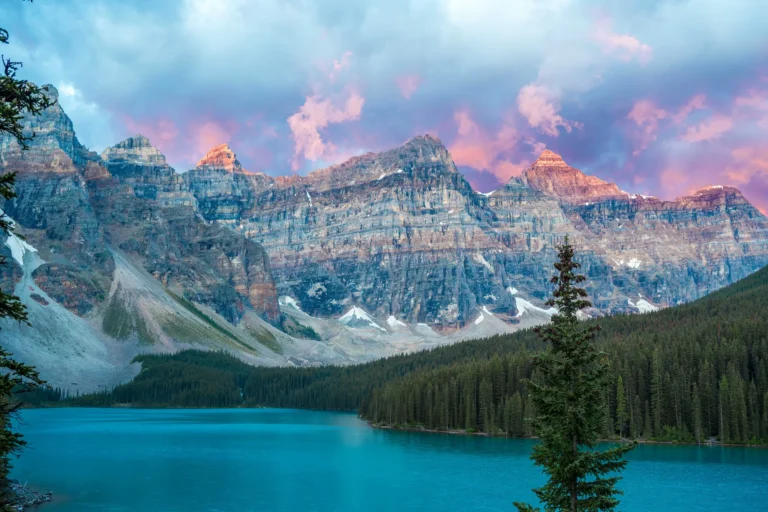
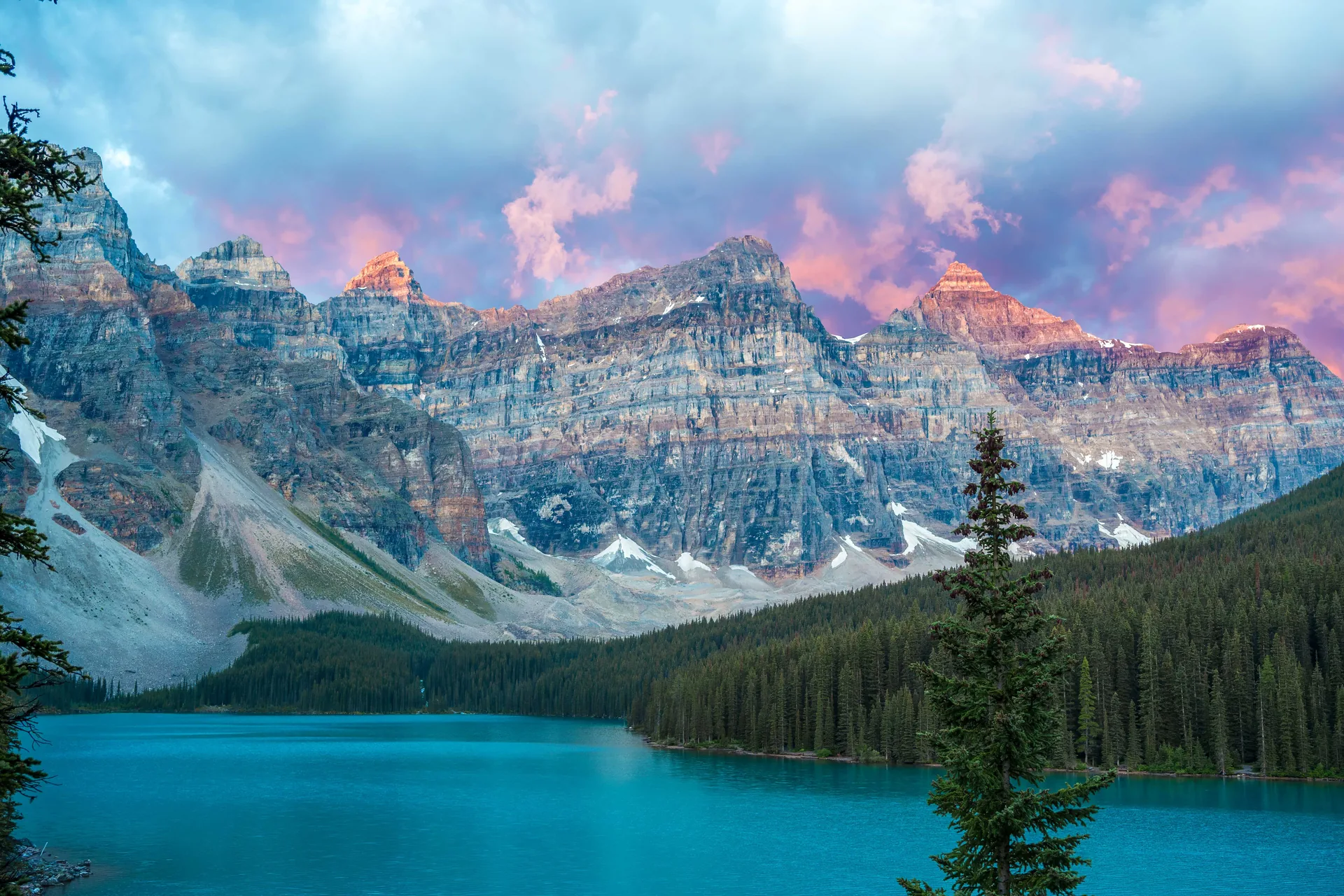
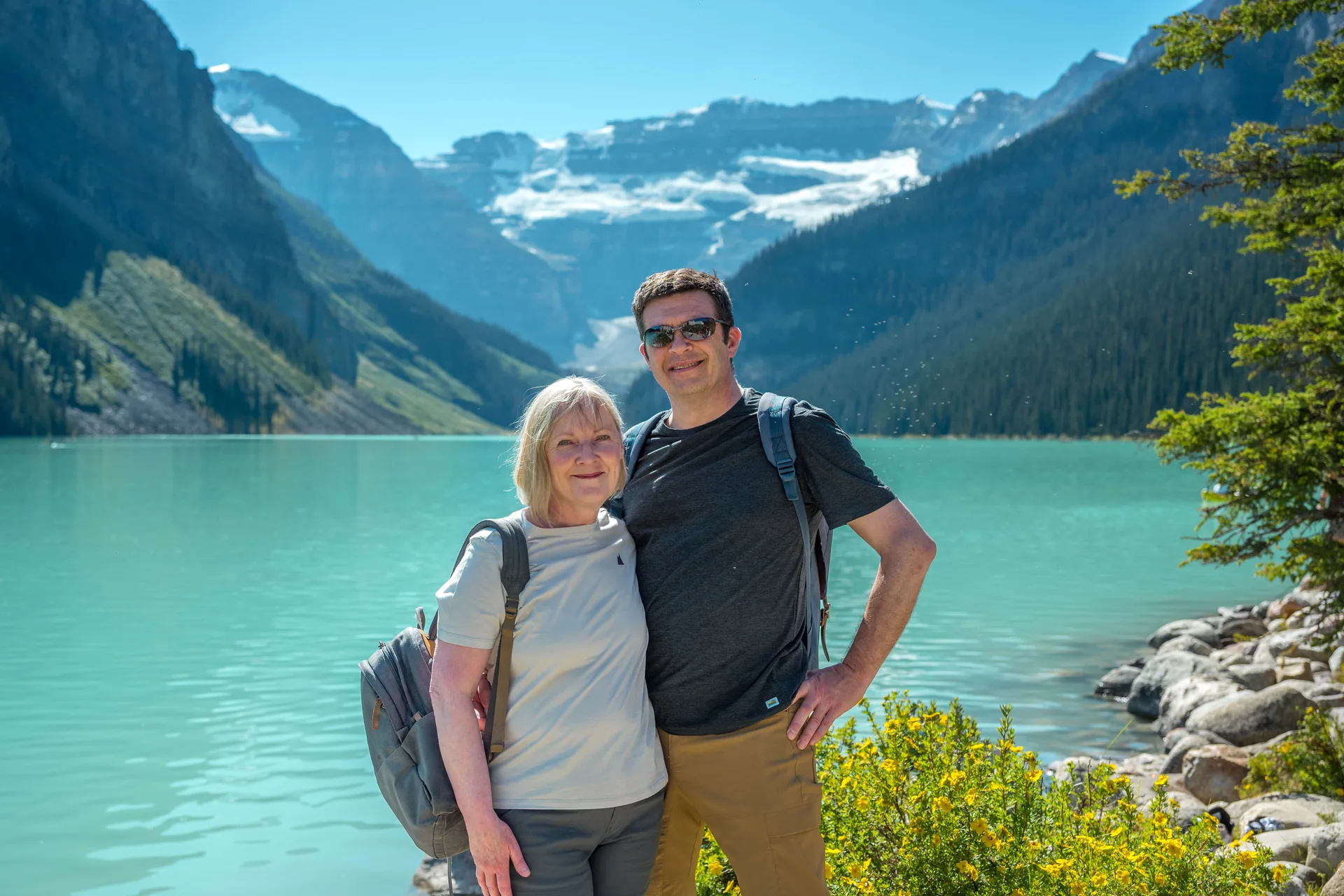
You’ve seen the photos. That electric, almost-impossible shade of blue-green, the kind that makes you think it’s GOT to be Photoshop, or whether the lakebed was secretly painted overnight. Standing at the rockpile above Moraine Lake for the first time, most people go quiet. It doesn’t look real. And yet here it is, cradled by the Valley of the Ten Peaks in Banff National Park, doing exactly what glacial lakes in the Canadian Rockies do best: defying expectation.
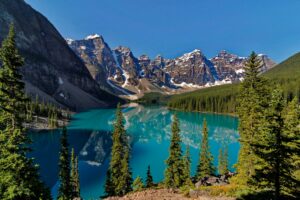
So what actually makes Moraine Lake so blue? The answer is equal parts geology, physics, and a slow-motion process that’s been unfolding for thousands of years, and it’s one of the most fascinating stories the Rockies have to tell.
It all starts with a glacier
Moraine Lake is fed almost entirely by glacial meltwater, primarily from the Wenkchemna Glacier above the valley. And while the water itself is clear and cold, it carries something extraordinary with it on the journey down: rock flour.
Rock flour, also called glacial flour or glacial silt, is exactly what it sounds like. As a glacier moves across bedrock, its immense weight grinds the rock below into an incredibly fine powder. Think of it like the world’s slowest, most powerful mill: over centuries, the glacier scratches and pulverises the minerals beneath it, creating particles so small they become suspended in meltwater rather than sinking to the bottom.
You can actually see evidence of this grinding process on exposed rock surfaces near glaciers, long parallel grooves called striations, scratched into stone by debris trapped beneath the ice. The same grinding that creates those marks is constantly producing the flour that gives Moraine Lake its signature colour.
The physics of blue water
Here’s where optics come in. When sunlight enters the lake, it interacts with those suspended rock flour particles in a very specific way. Through a process called the Tyndall Effect, the tiny particles scatter shorter wavelengths of light, the blues and blue-greens, while allowing longer wavelengths (reds and yellows) to be absorbed. The result is that blue and turquoise light is reflected back to the surface and to your eyes, while warmer tones effectively disappear into the water.
The exact shade you see depends on a few variables:
- The concentration of rock flour: more flour means more scattering, and often a more vivid blue. This is why the lake’s colour tends to intensify through June and July as glacial melt peaks.
- The size of the particles: finer particles produce a more brilliant blue; coarser particles can shift the hue toward green or grey.
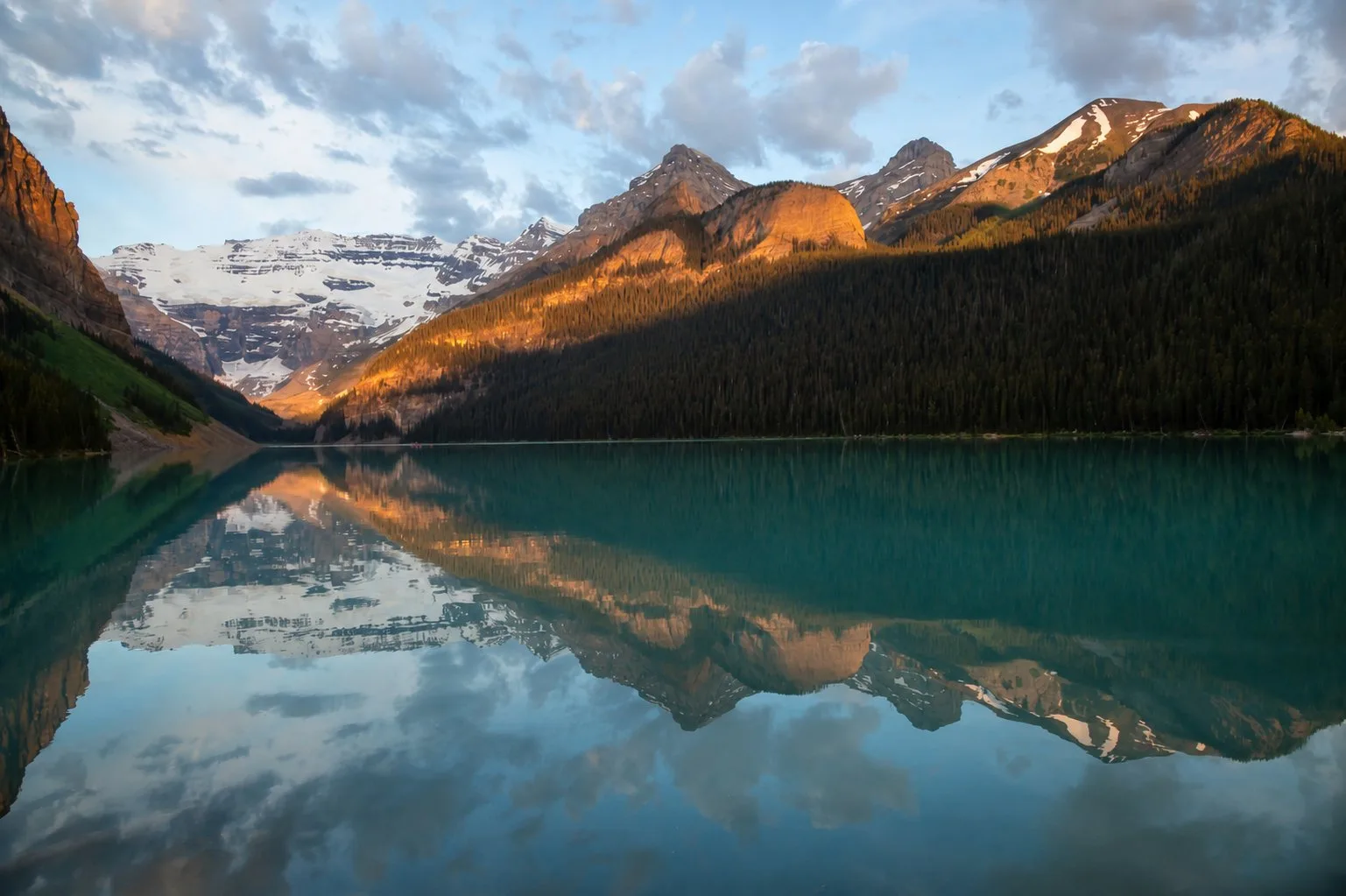
- The angle and intensity of sunlight: morning light hitting the lake at a low angle can deepen the colour dramatically. Midday sun on a cloudless day tends to produce the most saturated views.
- The depth and clarity of the water: Moraine Lake’s relatively shallow, clear water allows sunlight to penetrate deeply, amplifying the scattering effect throughout the water column.
This is also why the lake looks different in early spring (before significant glacier melt, when it has a darker, more conventional blue hue) versus peak summer, when the rock flour is at its highest concentration and the lake glows turquoise.
Why does the colour change throughout the day and season?
If you’ve seen multiple photos of Moraine Lake and wondered why they look different, it’s not just lighting or camera settings (or filters). The lake is genuinely dynamic.
After heavy rain, runoff from surrounding streams can briefly alter the rock flour concentration and particle size distribution, sometimes creating visible layers of different colours at the surface. In early June, when Moraine Lake Road first opens and the lake is just thawing, the colour is often a quieter, deeper blue, beautiful, but subtler than its summer peak.
By late June through August, as glacial melt is at its highest and rock flour input is greatest, the colour reaches its most famous intensity: that vivid, electric blue-green that ends up on $20 bills and desktop wallpapers. After September, as melt slows and rock flour begins settling out, the lake can shift back toward a deeper, cooler blue.
The practical takeaway: if colour is your priority, visit between late June and late August.
Can you swim in Moraine Lake?
You may have wondered why the photos you often see of Moraine Lake never have people swimming in them. After all, what’s better on a hot summer’s day than a dip in a lake? Well… you might reconsider that quick dip after you reach your fingertips down and feel the glacial cold water touch your skin. Moraine Lake sits around 5°C (41°F), even at the height of Summer when the ice has totally melted. It’s very cold (glacially cold, in the most literal sense) and swimming is not recommended. There are no designated swim areas at Moraine Lake, nor are there lifeguards on duty.
Can you drink the water in Moraine Lake?
The water is as clean as it looks, but it’s not potable without treatment. The suspended rock flour clogs filters quickly, and the water can harbour bacteria despite its pristine appearance.
Can I drive to Moraine Lake?
This is one of the most asked questions about visiting the lake, and the answer is straightforward: No, personal vehicles are not permitted on Moraine Lake Road (unless you are a hotel guest, staff, or hold a permit).
Parks Canada permanently closed the road to private vehicles in 2023 after years of severe congestion. Before the change, parking lots were consistently full before 3 a.m., with thousands of vehicles turned away daily. The closure has dramatically improved the visitor experience and reduced environmental impact.
In 2026, Moraine Lake Road is anticipated to open on June 1 and close on or around October 12. To visit, you have a few options:
Parks Canada Shuttle: The most popular option. Shuttles run every 30 minutes from the Lake Louise Park & Ride from 6:30 a.m. to 5 p.m., with the last return at 7:30 p.m. Reservations are required.
Roam Public Transit: The Roam Reservable Super Pass provides access to the Parks Canada Lake Connector Shuttle from Lake Louise. Reservations are recommended.
Cycling: The 14-kilometre road (with about 527 metres of elevation gain) is open to cyclists throughout the season. Early morning or late evening is best to avoid commercial vehicle traffic.
Guided tours: Licensed commercial operators, including ourselves, Radventures, are permitted to drive Moraine Lake Road as part of guided experiences, which is one of the significant advantages of booking a guided tour.
button
See it as part of a guided multi-day adventure
There’s a difference between seeing Moraine Lake and understanding it. The geology that formed the Valley of the Ten Peaks, the Indigenous history of this land, the ecology of a glacially-fed lake, and the sense of place that comes from spending real time in the mountains rather than arriving by shuttle and departing an hour later.
On our Best of the Canadian Rockies multi-day trip, Moraine Lake is one of the centrepieces of a deeper Rockies experience. Our guides know this landscape intimately, the stories behind the peaks, the science of the ice, the trails that most visitors never find. And because we’re a licensed commercial operator, we have access to Moraine Lake Road as part of the guided experience, without the shuttle booking scramble. We should also subtly mention… our Best Of Banff tours to Moraine Lake & Lake Louise have won multiple awards, including the TripAdvisor Travellers’ Choice Award, for 3 consecutive years in a row.
Button
One last thing
The blue of Moraine Lake is not permanent. The Wenkchemna Glacier, like glaciers throughout the Rockies and around the world, is retreating. As glaciers diminish, the rock flour input to these lakes will gradually change, and over time, so will their colour. The extraordinary blue you see today is a product of both deep geological time and a present moment that won’t last forever.
That’s not a reason for despair. It’s a reason to go. And it’s a reason to give back. As proud members of 1% for the Planet, we donate 1% of every single booking, not profit, revenue, to foundations that protect the lands we explore. These mountains give us beauty, livelihood, and purpose. Contributing to their protection for future generations is the least we can do in return.
Escape The Ordinary with Radventures.